
Police Lights in Kenya



Police Lights FAQs
💎 Which ones belong to the premium segment?
What Police Lights Are Used For
Police lights (also called emergency warning lights or beacons) are high-visibility flashing light units used on vehicles belonging to law enforcement, emergency services, security companies, and authorised escort vehicles. In Kenya, their use is regulated, and mounting police-style lights on unauthorised vehicles is illegal under the Traffic Act.
Types of Emergency Vehicle Lights
Light Bars
Full-width roof-mounted units that provide maximum visibility from all directions. Modern light bars use LED technology and can display multiple flash patterns. They are the standard for police vehicles, ambulances, and fire trucks. Available in different lengths to match the vehicle width.
Mini Light Bars
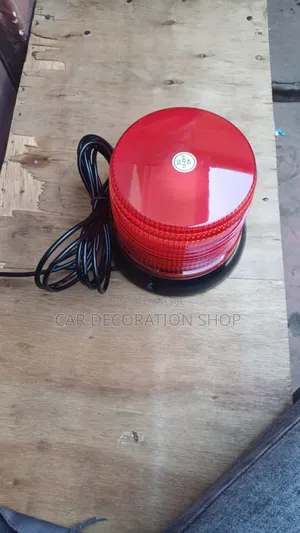
Compact versions that mount on the roof using magnets or permanent brackets. Suitable for unmarked vehicles, security patrol cars, and smaller emergency vehicles. They provide good visibility while maintaining a lower profile than full-size bars.
Dash and Visor Lights
Interior-mounted lights that sit on the dashboard or clip to the sun visor. Used on unmarked police and detective vehicles where external lights would compromise the vehicle's discreet appearance. They activate when the vehicle needs to respond to an emergency.
Grille and Surface-Mount Lights
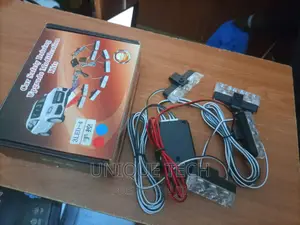
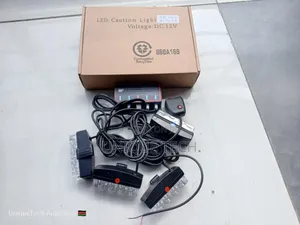
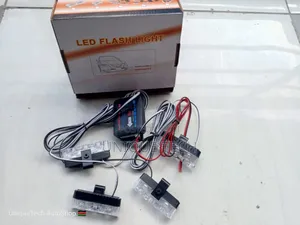
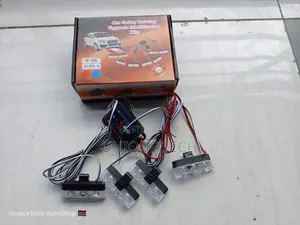
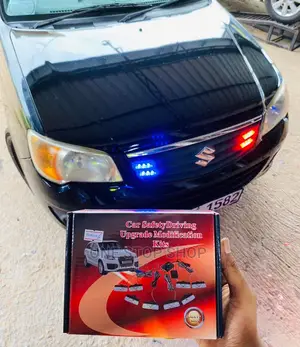
Small LED modules that mount into or onto the vehicle's grille, bumper, or body panels. They provide directional warning without the bulk of a roof-mounted unit. Often used as supplementary lights alongside a light bar for 360-degree coverage.
LED vs Halogen vs Strobe
- LED -- the current standard. LEDs are brighter, consume less power, last far longer, and produce virtually no heat. They allow complex flash patterns and colour combinations. Almost all new emergency lights are LED-based.
- Halogen rotating beacons -- the traditional spinning light with a reflector and halogen bulb. Still found on older vehicles and some construction equipment. They are less bright than LEDs and have moving parts that wear out.
- Strobe (xenon) -- produce very bright flashes using a xenon tube. They were popular before LEDs became dominant. Strobe systems consume more power and the tubes eventually burn out, making them less practical than modern LEDs.
Regulations in Kenya
Kenyan law restricts the use of emergency warning lights to authorised vehicles only. Blue lights are reserved for police and government security vehicles. Red lights are used by fire services. Amber/yellow lights are permitted for recovery vehicles, construction equipment, and escort vehicles with proper authorisation. Installing police-style blue or red flashing lights on a private vehicle is an offence that can result in prosecution.
Security companies and private escort services must obtain written authorisation from the Inspector General of Police to use warning lights on their vehicles. The colour, type, and placement of lights are specified in the authorisation.
FAQ
Can I put amber warning lights on my private vehicle?
What flash patterns are most effective for visibility?
How are police lights powered?


