
Enterprise
Sponsored
Nairobi, Nairobi Central, 39 min ago
1 views
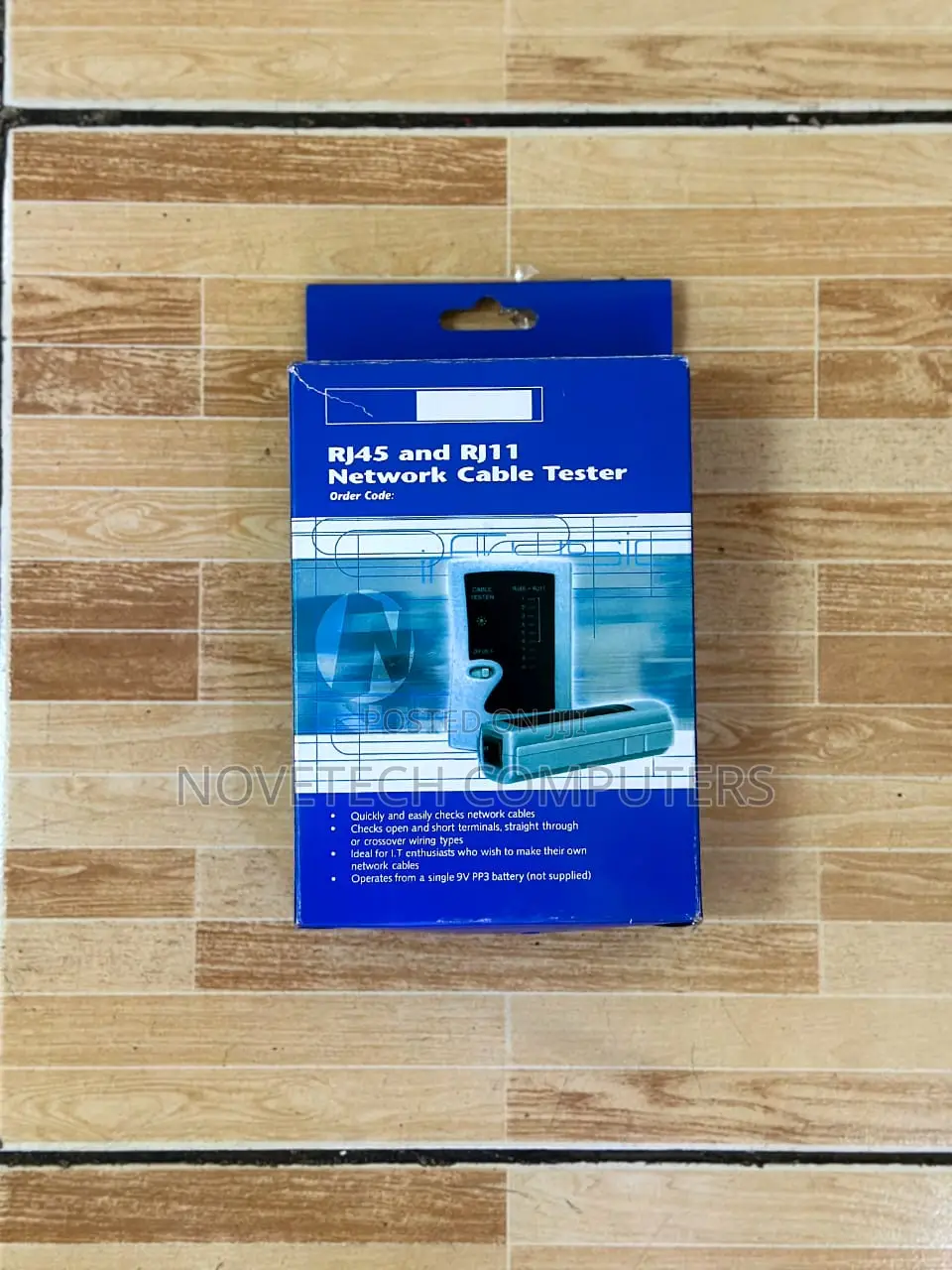
Rj45 and Rj11 Networking Cable Tester
Other
Type
Universal
Brand
RJ45 AND RJ11 TESTER
Model
1000 Mbps
Max LAN Speed
Brand New
Condition
Store address
Nairobi • Nairobi Central
Rahimtulla trust building first floor shop 12 along moi avenue opposite Bihi towers
RJ45 and RJ11 Testing: The primary feature is the ability to test both RJ45 (Ethernet) and RJ11 (telephone) cables.
Fault Detection: Detects common cable issues like shorts, opens, and miswired connections.
Continuity Testing: Verifies the cable's electrical continuity to ensure a signal can be transmitted.
Crossover and Straight-Through Testing: Can differentiate between straight-through and crossover cable types.
Portable and Easy to Use: Usually designed to be compact and lightweight for ease of use and portability.
LED Display: Many testers use LEDs to indicate test results and fault types.
Remote Testing: Some models feature a detachable remote unit for testing at a distance.
Dual Power Source: Some testers can be powered by batteries or micro USB.
Automatic Testing: Many testers automatically perform the necessary tests.

Safety tips
- Avoid paying in advance, even for delivery
- Meet with the seller at a safe public place
- Inspect the item and ensure it's exactly what you want
- Make sure that the packed item is the one you've inspected
- Only pay if you're satisfied


